What is a fractional project manager and do you need one?
For small businesses, this is often the only model that makes sense. You need the expertise and rigour of an experienced project manager, but not necessarily full-time and not necessarily forever. A fractional arrangement gives you exactly what you need for the duration of the project, without the overhead of a permanent hire.
Every small business has projects. A new website to launch. A system to implement. A product or service to bring to market. A process that needs rebuilding from scratch. Something that needs to happen, by a certain date, involving more than one person, with a real consequence if it goes wrong.
And yet most small businesses don't have a dedicated project manager. The founder manages projects alongside everything else they're doing. Or it gets handed to whoever has capacity. Or it just gets done, somehow, eventually, with varying degrees of chaos along the way.
That's where a fractional project manager comes in.
What project management actually is
Project management is the discipline of getting a defined piece of work from start to finish, on time, within scope, and without everything falling apart in the middle.
It sounds simple. Anyone who has tried to manage a complex project alongside a day job knows it isn't.
Good project management means someone is responsible for the overall picture at all times. They know what needs to happen next, who is doing what, where the risks are, and what to do when something unexpected derails the plan. They keep the team moving, the stakeholders informed, and the deadline in sight, even when things get complicated.
Without that person, projects drift. Deadlines slip. Scope creeps. Things get missed. People work hard but not always on the right things at the right time.
What makes it fractional
A fractional project manager is a senior project management professional who works with your business on a part-time or project basis rather than as a full-time employee.
For small businesses, this is often the only model that makes sense. You need the expertise and rigour of an experienced project manager, but not necessarily full-time and not necessarily forever. A fractional arrangement gives you exactly what you need for the duration of the project, without the overhead of a permanent hire.
It's also faster to get going. A fractional project manager who has delivered projects across multiple organisations and sectors can step in, get up to speed quickly, and start adding value almost immediately. There's no six-month onboarding curve.
What a fractional project manager actually does
Scoping and planning. Before anything else, getting clear on what the project actually is. What are we delivering? By when? Who is involved? What does success look like? Poorly scoped projects almost always run into trouble. The planning phase is where good project management pays its biggest dividends.
Stakeholder management. Keeping everyone who needs to be informed, informed. Not drowning people in updates, but making sure the right people know what's happening at the right time. In a small business that might mean a weekly summary to the founder and a more detailed view for the team.
Risk management. Identifying what could go wrong before it does, and having a plan for it. Not pessimism. Pragmatism. The projects that hit unexpected problems hardest are the ones where nobody thought about risk in advance.
Task and resource coordination. Making sure the right people are working on the right things at the right time. Tracking progress, unblocking obstacles, chasing what needs chasing without micromanaging the people doing the work.
Keeping things moving. This is perhaps the most underrated part of project management. A good project manager creates momentum. They make decisions, resolve ambiguities, and keep the energy of the project alive even when it gets difficult.
Closing properly. Projects have a beginning, a middle and an end. A fractional project manager makes sure the end is intentional: that deliverables are signed off, lessons are captured, and the team can move on cleanly rather than trailing off inconclusively.
The project I'm most proud of
One of the projects I’m most proud of to date in my career was a go-to-market launch of a brand new app on Microsoft Teams, in the space of six weeks.
Six weeks sounds impossible. In many ways it was. It involved cross-functional teams working across different time zones, a tight deadline with no room for slip, and the kind of pressure that either breaks a project or forges it into something brilliant.
We used Asana to manage every task and keep the whole team aligned on what was happening and what was coming next, while Slack carried the project updates communication. And because of the time zone differences, almost all of the detailed work happened asynchronously, with team members in different countries picking up where others left off, with Asana keeping everything visible and nothing getting lost.
It worked. We launched on time, yes we were all frazzled by the end of it but it taught me more about what good project management actually looks like under pressure than any qualification or course ever could.
The qualifications behind the practice
I'm a firm believer that project management is a discipline worth studying properly, not just picking up as you go. Over the course of my career I've completed:
PRINCE2® Foundation and Practitioner: the most widely recognised project management framework in the UK. It covers structured approaches to planning, managing risk, and controlling projects through defined stages.
PRINCE2® Agile Practitioner: combining the PRINCE2 framework with agile principles, for projects that need structure and flexibility in equal measure.
PMP® Project Management Professional: one of the most rigorous and globally recognised project management qualifications, awarded by the Project Management Institute. It requires documented project management experience as well as passing a demanding examination.
Certified ScrumMaster®: focused on agile delivery using the Scrum framework, covering sprint planning, retrospectives, and iterative delivery.
Extraordinary PM Mastery via extraordinarypm.com: a course that goes beyond frameworks into the human and leadership dimensions of project management: the communication, the stakeholder relationships, the decisions under pressure. The stuff that actually determines whether a project succeeds or fails.
That's a significant investment in learning. I've done it because I believe project management done well is genuinely transformative for the businesses and teams involved, and when done badly, it's one of the most expensive things a small business can experience.
The Efficiency Partner Method™ for project work
When I take on a project for a client, I use The Efficiency Partner Method™, a practical four-stage framework built from everything I've learned across my qualifications and hands-on experience.
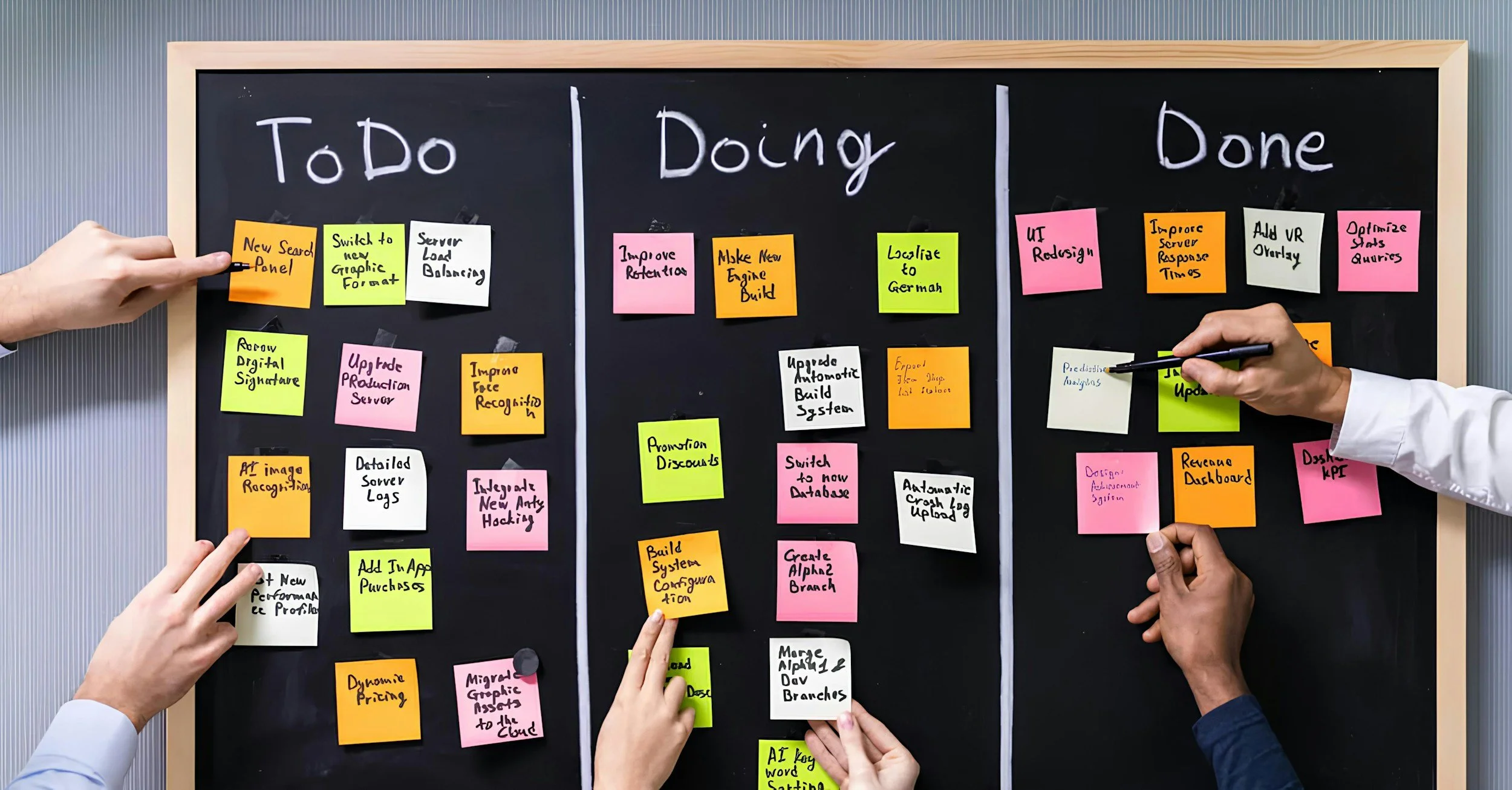
We start with The Prize: getting clear on the goal, what success looks like, and the key results we're working toward. Then we identify The Pillars: the meaningful areas of work that need to happen, prioritised by what's critical versus what can wait. Those break down into The Plays: the specific actions tracked on a Kanban board and worked through in sprints or time chunks. And throughout and beyond the project, The Pulse keeps everything on track through regular check-ins, reviews and a clear close-out process.
It's designed to be rigorous without being bureaucratic. Structured without being rigid. And always adapted to what the client actually needs rather than applied as a one-size-fits-all template.
Who I work with
I work with small businesses, start-ups and purpose-led organisations, not large corporates. That's a deliberate choice.
Small businesses have a different relationship with projects. The stakes are personal. The budgets are real money. The founder often has to be across everything while also trying to let go enough for the project to move. There's usually less infrastructure, less resource, and less margin for error than in a large organisation.
That's exactly the environment I thrive in. I understand the constraints, I work within them, and I bring the same quality of project management that a large organisation would expect, scaled appropriately for where you actually are.
Signs you might need a fractional project manager
You probably need one if any of the following sound familiar:
You have a significant project coming up and no dedicated resource to manage it properly.
A previous project ran over time, over budget, or just didn't quite land the way it should have.
The founder is managing the project alongside everything else and something is going to give.
You need someone who can coordinate across multiple people, suppliers or teams without things getting dropped.
You want the project done properly the first time rather than fixed later.
If you recognise yourself in any of the above, get in touch here and we can have a conversation about what your project needs.
You might also find these useful:
What is a fractional operations manager?
Victoria Lincoln is a fractional operations partner helping small businesses, start-ups and purpose-led organisations get their systems, processes and day-to-day running properly sorted. Hands-on delivery, without the overhead of a full-time hire. Working remotely from Devon across the UK and Ireland. Find out more at The Efficiency Partner.
